
Sub-Total: $6.00
-
×
 Bonsai Fertilizer Covers/Cups with no Lid
1 × $6.00
Bonsai Fertilizer Covers/Cups with no Lid
1 × $6.00
Subtotal: $6.00
All living things require a period of rest. For humans, that rest comes in the form of sleep. For trees, including bonsai, it comes through winter dormancy. Dormancy is the natural phase during which a tree’s growth slows dramatically or stops altogether, allowing it to conserve energy and prepare for renewed growth in spring. Ensuring proper bonsai winter protection is crucial during this time to safeguard your trees.
During dormancy, a bonsai’s internal activity is reduced much like a bear hibernating through winter. While this can be a confusing time for beginners, understanding what is happening biologically is the key to keeping your trees healthy year after year.
A common misconception among beginners is that cold temperatures will kill bonsai. While this is true for tropical species, most temperate and hardy bonsai actually require cold weather to remain healthy.
Without a proper rest period, trees behave like marathon runners who never stop to recover. They slowly lose vigor and eventually fail. This often happens when temperate bonsai are kept indoors during winter out of fear of freezing. Providing the correct dormant conditions allows trees to recharge and emerge strong in spring.
Successful overwintering begins with two pieces of information:
Tree hardiness varies by species, just as climate varies by geography. The USDA Hardiness Zone Map is an excellent reference for determining the historical low temperatures in your area. Your winter protection strategy should always be based on the intersection of tree hardiness and local climate extremes.
All bonsai fall into one of four general categories:
Trees must transition into dormancy slowly and naturally as seasons change. In summer, growth is active. In fall, growth slows. In winter, activity largely stops. Spring then reverses the process.
Forcing a tree abruptly into dormancy, or preventing dormancy entirely can cause long-term harm.
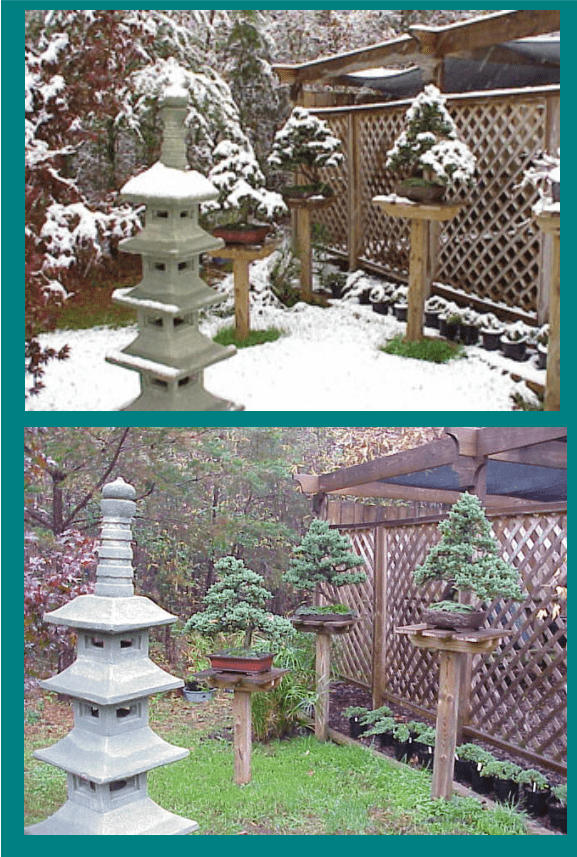
Tropical and semi-tropical species (such as ficus, fukien tea, serissa, and pomegranate) must be protected once nighttime temperatures drop into the low 50s°F. These trees must not freeze.
Unlike temperate species, tropical bonsai continue to grow slowly through winter, so they require ongoing care.
Light
Place tropicals in the brightest location available, ideally a south-facing window or heated sunroom. Rotate trees regularly to ensure even exposure. If natural light is insufficient, fluorescent lighting placed 3–4 inches above the canopy for 15–18 hours per day works well.
Humidity
Indoor winter air is very dry. Increase humidity by:
Water and Pests
Water carefully as growth is slower, so overwatering can cause root rot. Watch closely for pests, which thrive in dry indoor conditions.
Some growers successfully overwinter tropical bonsai in spare bathrooms using benches, humidity trays, and fluorescent lights on timers. The enclosed space maintains humidity without affecting the rest of the home.
For temperate and hardy bonsai, the goal is not to prevent cold, but to reduce its most damaging extremes.
Bonsai roots are far more vulnerable to cold than branches. Unlike trees in the ground, bonsai roots are exposed on all sides of the pot, including from below. This makes some winter protection essential even for fully hardy species.
Common locations include under decks, against foundations, or in unheated garages.
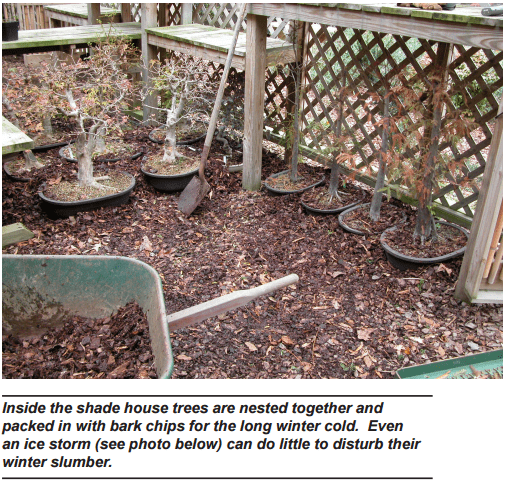
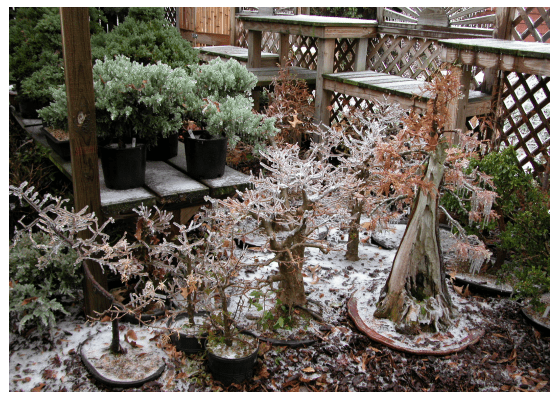
In very cold regions, temperate (but not fully hardy) species require additional protection through cold frames.
A cold frame is an insulated enclosure that:
Light is not required during dormancy, even for evergreens.
Cold frames can be built from wood, brick, plastic, or cinder block and placed:
The biggest risk is overheating on sunny days, which can break dormancy too early and lead to failure.
In extremely dry winter climates, maintain humidity by misting the interior and placing open containers of water inside the cold frame.
Winter dormancy is not a threat to bonsai, it is a biological necessity. When trees are allowed to rest naturally and protected appropriately from extremes, they emerge healthier, stronger, and more resilient in spring.
Understanding your trees, your climate, and the principles of dormancy transforms winter from a season of anxiety into one of confidence and success.
Learn about watering bonsai in this next article: