
Sub-Total: $0.00
First Bonsai Tree? Complete Beginner Bonsai Care Guide | Bonsai Learning Center
Welcome to Bonsai
Your bonsai is a living tree in a small container. The key to success is observation. Check your tree often, water when needed, and adjust care as the seasons change. Beginner success starts with watering, environmental needs, tree health, and foundational horticulture practices.
Watering
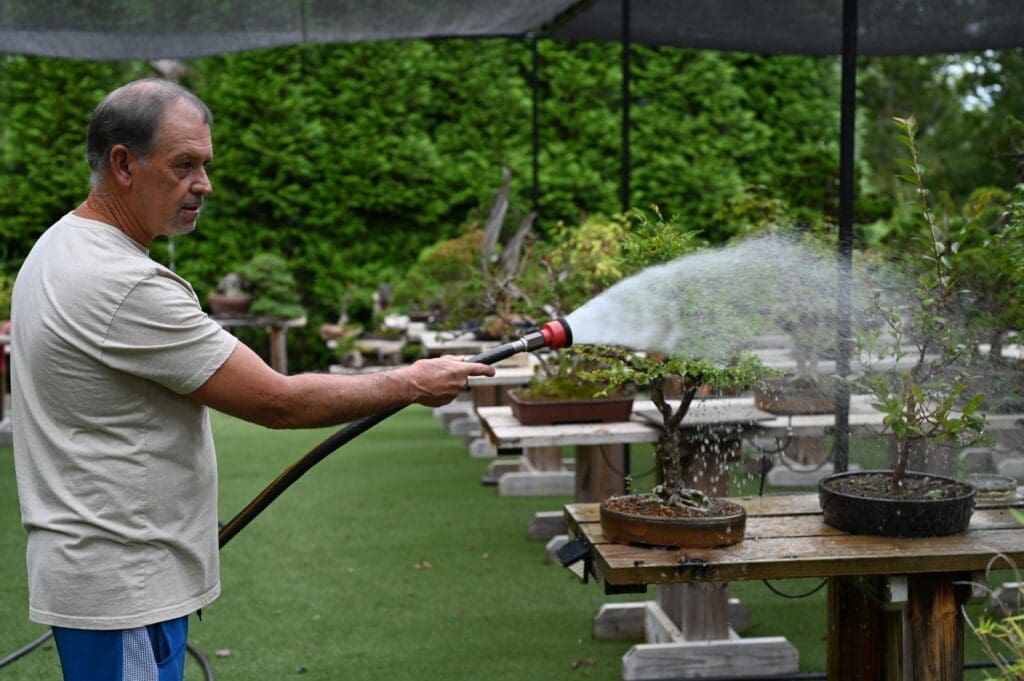
We normally water our trees daily especially during the growing season, due to the inorganic soil that we use and the small containers. It is best to use a hose with a fine rose and water thoroughly until water runs freely from the drainage holes. The goal is evenly moist soil throughout the pot. When you do water, you can’t water enough as most of the water drains through the holes in the bottom of the pot.
It is OK to have the top couple of centimeters dryer before watering again. You can place your finger into the soil to feel the soil to see if it is dry or not.
Best time to water: early morning. Avoid late evening watering when possible because wet soil overnight can encourage fungal problems.
Placement and Light
Most outdoor bonsai should live outside, not indoors. This includes but not limited to, pines, junipers, maples, elms etc. They need sunlight, airflow, seasonal changes, and natural dormancy. Tropical bonsai, such as ficus, can be grown indoors in bright light and protected from cold.
Junipers and pines love sun while most deciduous tress such as maples and elms want more shade and definitely protected from sun in the afternoons.
If your tree starts declining, check placement first. Too little light, too much heat, dry indoor air, or poor airflow can all stress a bonsai.
Soil and Drainage
Bonsai soil is different from regular potting soil. It should drain quickly, allow air to reach the roots, and support healthy growth in a small container. Heavy garden soil can compact, hold too much water, and suffocate roots. This is why we use inorganic soil for our bonsai which allows fast draining and a lot of air exchange, which encourages root growth to sustain the tree.
Do not let your bonsai sit in standing water unless you have been specifically told that your species can tolerate it, such as bald cypress.
Fertilizing
Because bonsai live in small pots with limited soil, nutrients are used up quickly. Feed during the growing season, generally from spring through summer and into early fall. Temperate trees should not be fertilized during winter dormancy. Tropical or indoor trees may receive reduced feeding year-round. We recommend both an organic cake and organic liquids to provide a good balanced diet including micro nutrients.
Detailed fertilizing information including products, timing and instruction can be found here.
Pruning
Light pruning helps maintain shape and encourages compact growth. Remove dead, damaged, or unwanted growth with clean, sharp tools. Avoid heavy pruning when the tree is weak, newly repotted, or under stress.
For major styling, wiring, or branch removal it is important to do those at the right time of year for each species of tree.
Winter Care
Winter care depends on the type of tree and where you are.
Tropical and semi-tropical bonsai must not freeze. Protect them when nighttime temperatures drop into the low 50s°F. Temperate and hardy bonsai need winter dormancy, but their roots still need protection because roots in bonsai pots are more exposed than roots in the ground.
For hardy outdoor bonsai, protect the pot from harsh wind and repeated freeze-thaw cycles. Place trees in a shaded, wind-protected area and insulate pots with mulch. Placing your bonsai on the ground and mulching to the pot rim with cedar or cypress mulch is a great way to protect the root system. Temperate bonsai need to have dormancy, so freezing is OK, we just want to control the fluctuation as much as possible.
Pests and Fungal Issues
Inspect your tree often, especially while watering. Look for discolored or curling leaves, wilting tips, damaged foliage, sticky residue, webbing, fuzz under leaves, or unusual spots. Regular observation is key, because small problems can escalate quickly in a bonsai pot.
Before treating, identify the problem. Overwatering, underwatering, poor light, and nutrient issues can look like pests or disease.
Repotting
Most bonsai are repotted every 2 to 3 years. Some species such as maple have aggressive root growth and can be repotted every year. Most bonsai are repotted in the spring as they start to push new growth.
When to Ask for Help
Contact Us if you notice sudden leaf drop, black or mushy roots, severe wilting, pests, fungus, or if you are unsure whether your tree is indoor, tropical, temperate, or hardy. We are here to help!
Need help? Bring your tree or send clear photos to Bonsai Learning Center. We are here to help you grow with confidence.
Check out our detailed information on Watering Bonsai: